
How M4ESTRO makes Manufacturing‑as‑a‑Service truly scalable and decision ready
Visual Components, our valuable partner in the M4ESTRO research project, is exploring how the Asset Administration Shell (AAS) can facilitate interoperable and scalable Manufacturing-as-a-Service (MaaS).
MaaS is a promising approach to provide companies with access to dynamic, on-demand manufacturing resources based on an as-a-service model. This concept allows companies to rapidly reconfigure their production and sourcing networks should unexpected events occur. Rather than relying solely on fixed production lines and suppliers, manufacturers can tap into available capabilities when and where they are needed.
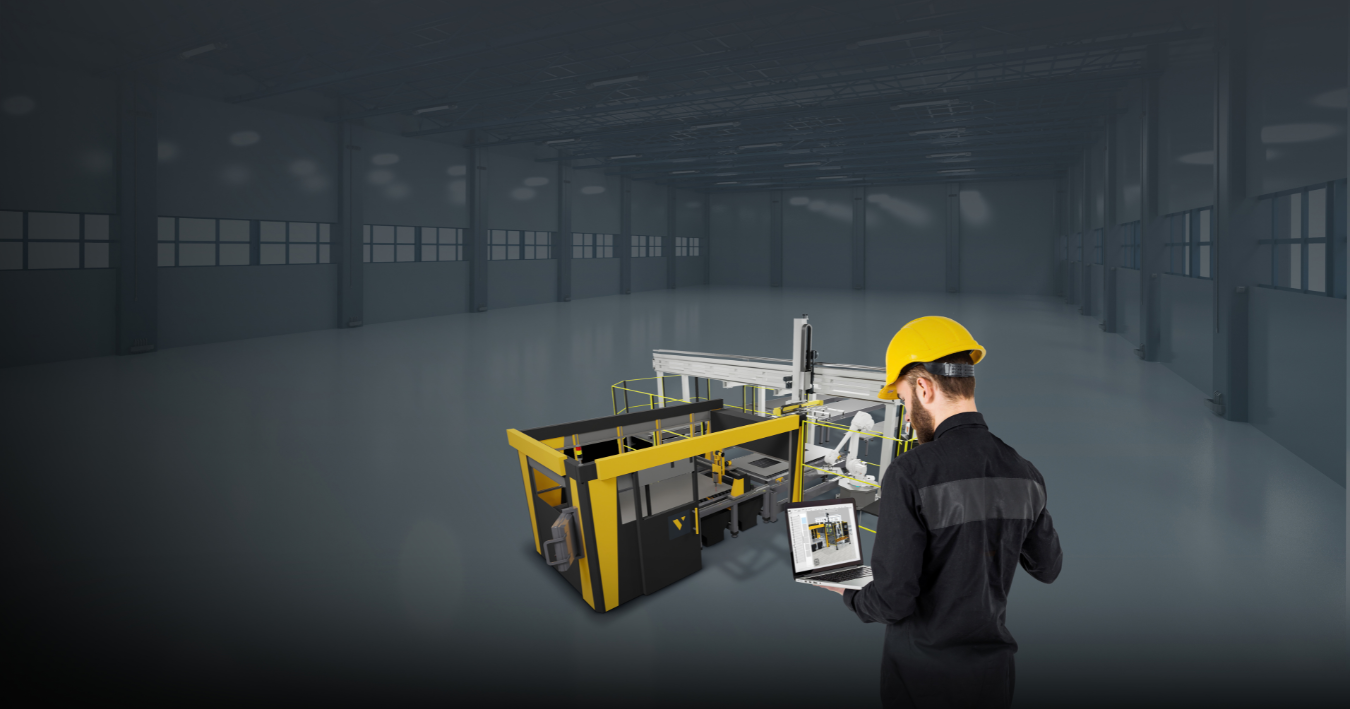
The Technology at a Glance
AAS provides a standardized, machine readable, digital representation of manufacturing assets such as machines, production cells, services and their capabilities, making them digitally understandable across different tools, system providers, integrators, and end users. This common representation allows interoperable data exchange across planning, simulation, and operational systems. It can also reduce integration efforts and a scalable foundation for plug-and-produce, reconfigurable, and service-oriented manufacturing environments.
What’s New in M4ESTRO
In M4ESTRO, this foundation is combined with production simulation to create Hybrid Digital Twins. AAS defines what assets are and what they can do, while simulation adds what AAS alone cannot such as behavioural modelling, capacity evaluation, and what‑if analysis.
The pairing of AAS based asset descriptions with Visual Components’ simulation technology and planning capabilities allows M4ESTRO to achieve early decision‑making and demand–supply mediation in MaaS scenarios. Distributed manufacturing resources can be assessed not only by their declared capabilities, but also by how they perform under real production conditions. This addresses a central MaaS challenge, turning distributed manufacturing assets into discoverable, comparable, and composable production services.
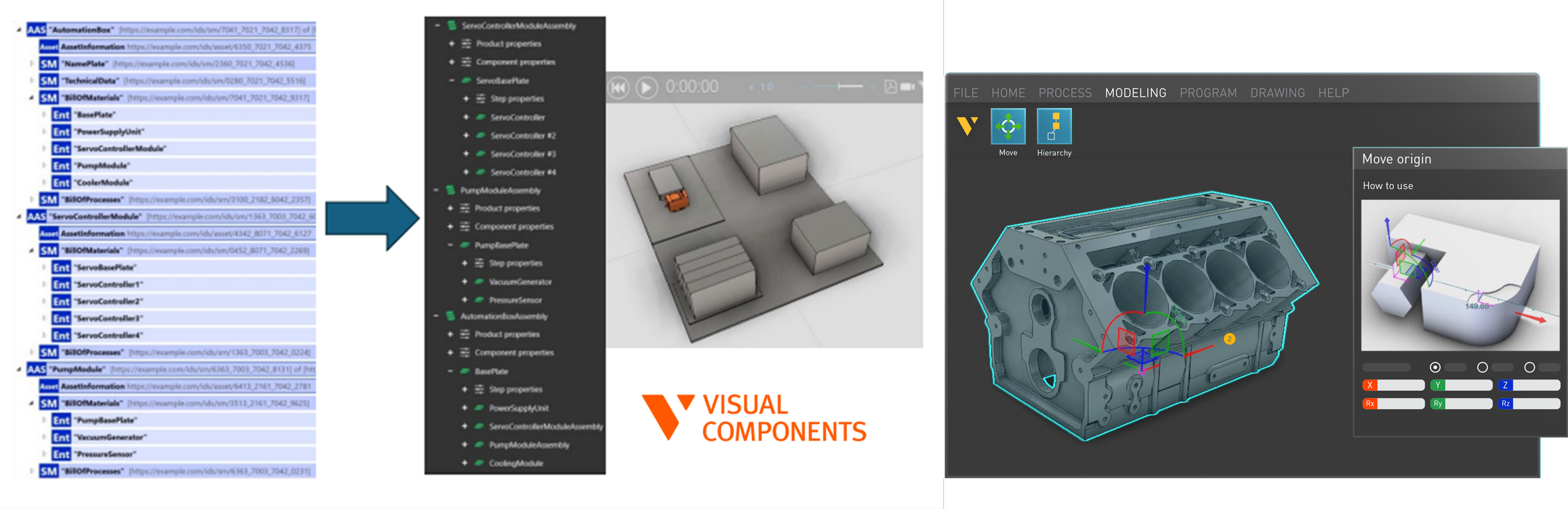
Bringing MaaS from Concept to Industrial Reality
Importantly, the goal is not to replace existing tools. It is to establish a common semantic layer that helps those tools work together, supporting industrial interoperability at scale.
By combining AAS with advanced production simulation in projects such as M4ESTRO, Visual Components is shaping next‑generation simulation solutions in which manufacturing resources can be described once, reused across different ecosystems, and dynamically evaluated for real-world feasibility and performance.
The result is a more practical foundation for MaaS, one that connects standardized asset descriptions with the simulation capabilities needed to assess whether a manufacturing service can actually meet a given production requirement, bringing MaaS approach closer to industrial reality.